Posts

Showing posts with the label IoT

DIY Automatic Medicine Reminder Using Arduino

Image
Today I am sharing a project that can help people to remind them to take their medicine on time. This project is based on Arduino UNO. This Medicine Reminder can be used in hospitals, for doctors, or for patients at home. You can program it according to your needs like you want to get notified by call, message, mail, or alarm. This project is taken from Circuit Digest and is easy to make. DIY Arduino Medicine Reminder using Arduino  Check out the project here...

IoT Based Panic Button using ESP8266-01

Image
  A Panic button is used to send an SOS message to the police or nearby people when you need help to get out of any danger. This panic button you are going to make will send an emergency email to the persons defined by you. Although, most smartphones have a pre-built SOS Button which sends an emergency alert to the selected contacts and police with the location but this Panic button is a physical button that can come in handy in an emergency situation. You will be using an ESP8266 WiFi module to complete this project. So start making IoT Based Panic Button from IoTDesignPro .

Home Assistant & Raspberry Pi

Image
Today's project is from IoTDesignPro . In today's tutorial, we will learn how to integrate Home Assistant and Raspberry Pi to make your home a smart home. Home Assistant is an open-source operating system for the Smart Home. It operates like IFTTT or Samsung Smart Things but is different in the sense that it's online, open-source, and a completely local alternative to things like HomeBridge and SmartThings. This means that it gives you control of home automation without the cloud. This results in smoother service, reliability, and better protection. Home Assistant also helps you in building complicated Scripts and Automations that blow other Smart Home platforms out of the water. It allows products from hundreds of manufactures and protocols to integrate seamlessly with DIY projects and homemade solutions. Integration of Home Assistant with RaspberryPi makes your living very very easy and comfortable. Have a look at this video which demonstrates the working of the tutorial....

Automate your home with and without Internet

Image
  In the era of Home Automation Internet plays a vital role in controlling automated devices. If your internet connection gets lost, you will not be able to any of the Home Automation devices you have. So, to solve this problem I bring you the Electronics Project from Hackster which guides you to make your own Home Automation System that works without the Internet too. We will be using Blynk and smartphone Bluetooth to control IoT Devices without the Internet. The project is based on NodeMCU as it is a low-cost IoT Platform. So, Your project will require less money to build. Here is the working of the Home Automation System  After watching the video head to the Project Tutorial page .

Automate your Home with Arduino Nano using Smartphone and Bluetooth

Image
Most of the things in the world are getting automated. People are getting to see automation in every small thing which they can't even imagine. The most popular part where we are seeing most of the automation part being done is in our homes. Home automation makes people's life easier. You just have to control your devices sitting in one place in your home. The home automation system can be expensive for some, so I am sharing this DIY Project with you all from Instructables which will tell you how to make your home automated with the help of Arduino Nano board, Bluetooth module, and some other supplies. The system will use your smartphone Bluetooth to connect and you just have to connect your smartphone Bluetooth with the devices and then you can access your home appliances with your smartphone. This automation system has also got manual control so that if you have some trouble logging in with your phone you can control your devices manually too. So, if you got the whole idea o...

Watch OTT Content on Raspberry Pi

Image
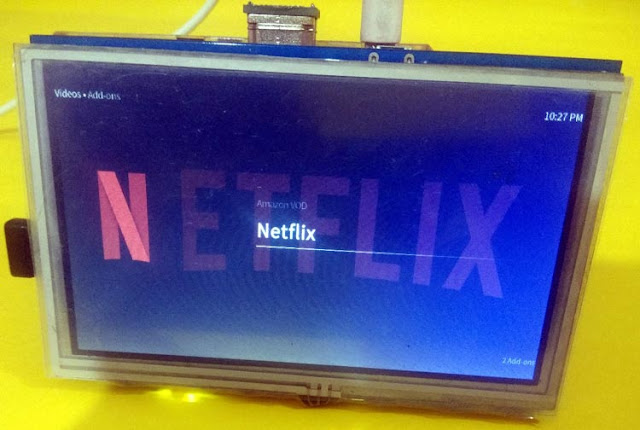
In India, Online Media Streaming is gaining popularity very rapidly especially due to the Global Pandemic. One more reason for this is the content that is provided on the OTT Platforms. You also get the benefit of saving your storage space as the minimum storage is used while watching online media and you can set the quality of media according to your network speed. The increased number of OTT Subscription leads Circuit Digest to find a new way of watching OTT media, through RaspberryPi .   If you don't know about RaspberryPi , it  is Linux based palm-size computer and can do all the tasks which a ‘normal’ computer can do. This is not the exact definition but this might give you some hint about it. The player we will be using to watch videos is Kodi media player .   Kodi is an open-source software media center, which allows us to access all kinds of content, including videos and music. We can run that content on any device like TV, laptop, phone, even in our Raspber...

Create a Telegram Bot with ESP32 which controls GPIO Pins through Telegram Chat

Image
Telegram is a cross-platform cloud-based instant messaging, videotelephony, and VoIP service with end-to-end-encrypted chat for secret chat only, whereas server-client / client-server encryption is used in cloud chat. In Today's world, everything is getting smart. Many new smart devices are being introduced in the commercial markets. Controlling all smart devices can be a handy job. IoTDesignPro comes with a different way of handling your smart devices. Unlike other social media apps, Telegram allows users to share any kind of open-source content. It announced the Telegram bot API in 2015, which lets third parties create telegram bots for ESP32 that utilize the messaging application as their main communication interface. This means that we can control any smart device with Telegram only. Previously, IotDesignPro also did some projects with the telegram app like Using Telegram Bot with Raspberry Pi: Sharing Text and Files Raspberry Pi GPIO control using Telegram App You might find...

Build your own Arduino based Smart Vacuum Cleaner Robot for Automatic Floor Cleaning

Image
 In today's rapidly growing world, we all are busy every time doing something. We don't have time to clean our house regularly. Thinking about this situation Circuit Digest has innovated a new Smart Vaccum Cleaner Robot. Although, there are already some self-cleaning robots available in the market but what makes this smart robot worth buying is that it is way too cheaper than the current commercial products available. For instance, Roomba is the most popular cleaning robot and the cheapest Roomba cleaning robot available in the market costs 24000 INR (at the time of writing). The robot is simple to make, Lightweight, and practical. It comes with ultrasonic sensors and an IR Proximity sensor. Ultrasonic sensors help the robot to avoid obstacles and move freely in the room until it is completely cleaned. IR proximity sensors prevent the robot from falling down the stairs. Circuit digest also made some awesome and interesting bots before which include  Self Balancing Robot ,...

Two-Wire Hall Effect Switches with Self Diagnostics offer High Sensitivity and Stability Performance in Automotive Applications

Image
  Diodes Incorporated introduces two new Switch ICs. The first one is two-wire unipolar (AH323xQ/4xQ) and the second one is latch (AH327xQ/8xQ) . They provide high sensitivity and high stability over the operating temperature range. Both of them come with integrating self-diagnostics for monitoring the main device blocks, supply voltage, and temperature, the abnormal condition will be indicated by the third output state. To provide superior stability of the magnetic operating and release points (BOP/BRP), it is given the advanced chopper-stabilized design. By coupling stability with a high ESD rating of 8kV, built-in reverse blocking diodes, and supply pin Zener clamp, we can meet the demanding requirements of automotive proximity/position sensing applications. The two-wire hall switches reduce the number of wires and thus reduce the system complexity and cost at the same time. Thus, improving robustness to electrical voice. With a  2.7V to 27V operating voltage and -40˚C to...